International Fund Annual Report
January 2026
We are pleased to present our review and outlook for the Pathfinder International Fund. While the mandate is a stand-alone fund, it is meant to be used in conjunction with the other Pathfinder mandates, along with advice from the Pathfinder Wealth Advisory Team here . Please follow this link here to access the Pathfinder archives where we have saved the reviews from other mandates for this and prior years.
PATHFINDER INTERNATIONAL FUND
For the year, the Pathfinder International Fund returned 18.9% while International Developed & Emerging Large & Mid-Cap stocks were up mid 20’s% (both in CAD terms).

This year, international markets were strong again. However, the U.S., although positive (USD +10.9% for the year), was not as strong as the rest of the world. A combination of geopolitical developments and valuation differentials accelerated capital flows to other regions (+25.6%). The primary driver of the fund’s performance relative to the market was, again, its exposure to the technology value chain, along with a significant gold overlay that we added as a currency hedge. Our largest missed opportunity was not allocating more capital to Europe. We identified last year that the region was undervalued and did initiate positions (the fund currently has 11% exposure), but in hindsight, we could have been more aggressive. Our European security selection was also suboptimal.
We have not materially changed the themes that we identified in 2019 and still focus on technology, along with a few special situation companies, and growing China consumption theme. Our process is to identify the emerging themes and geographic areas that will benefit from medium-to-long-term structural trends. Then we add the companies that we believe are the best positioned globally to exploit those opportunities.
FUND REVIEW AND POSITIONING
Our best performers for the year were Nec Corp. (6701 JP) +85.4%, Tokyo Ohka Kogyo (4186 JP) +57.4%, Alphabet Inc.-C (GOOG US) +57.1%, Kingdee Intl Software (268 HK) +48.3%, ASML Holding-Nv (ASML NA) +47.2%, and Prologis Mexico (FIBRAPL 14 MF) +47%. We were pleased to see greater dispersion this year in returns across different strategies and countries. Technology stocks have been exceptionally strong, with returns concentrated from a small number of large companies over the past few years. We were satisfied that other parts of the portfolio were able to contribute meaningfully this year. We also added a sizable gold option position, which contributed 2.4% to portfolio returns. This was implemented less as a directional view on gold prices and more as a hedge against the U.S. dollar, for which we hold a negative view. With respect to the detractors, Shin-Etsu Chem (4063 JP) -11.8%, Jeol Ltd. (6951 JP) -14.5%, Yakult Honsha Co. (2267 JP) -21.5%, XP Power Ltd. (XPP LN) -29.4%, and Meituan (3690 HK) -35.2% were the worst performers for the year. We were also short the Nasdaq via QQQ US as a means to structurally reduce our technology overweight (all returns above are in CAD and do not include dividends).
Figure 2 presents the fund’s geographic exposure. This data is not based on where a company’s shares trade (e.g., NYSE, TSE, LSE), but rather on where, in our analysis, the company’s revenue and business activities are generated. For example, one of our largest holdings, Tokyo Electron Ltd. (8035 JP), is listed on the Tokyo Stock Exchange (TSE). However, it generates the majority of its revenue in Asia (China, Korea, and Japan), with comparatively less exposure to Europe. We therefore classify its geographic exposure based on revenue mix rather than assigning 100% exposure to Japan. Approximately one-third of the fund is exposed to Asia and one-third to the United States (reflecting that many international businesses sell into the U.S.). Europe remains a relatively small allocation. The most significant change this year was an increase in cash and gold, along with options used to reduce our notional technology exposure.
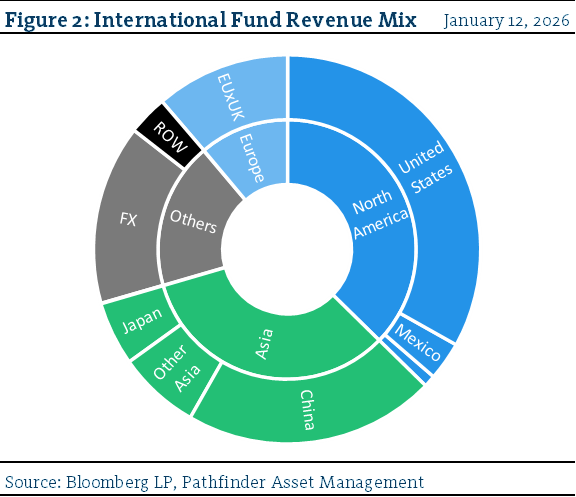
Figure 3, by contrast, presents the same companies categorized by our investment themes. Through our ongoing research process—analyzing companies, their suppliers, competitors, and customers—we naturally identify structural investment themes that inform portfolio positioning. As value investors, we also identify companies trading below our estimate of intrinsic value and add those into the portfolio opportunistically. We remain actively engaged in identifying new themes to research and, where appropriate, deploy within the mandates.

We reproduce Figures 4 and 5 below from our 2025 Large Cap Review and Outlook. These charts illustrate what we believe is a meaningful disconnect between the global economy and equity markets. After decades of increasing cooperation among major global economies, recent geopolitical developments suggest that the largest economic blocs—the United States, China, and Europe—are beginning to decouple. During the long expansion of globalization, geographic exposure offered increasingly lower diversification benefits. That dynamic now appears to be reversing. Figure 4 presents the returns of major equity markets from the onset of COVID-19 through the end of last year. As shown, there is a substantial performance divergence between the United States and the rest of the world. Figure 5 presents valuation metrics across the major economic regions. At present, Asia and Europe offer materially more attractive valuations relative to the United States. While the data is skewed by the outsized impact of the “Magnificent Seven,” the valuation gap remains pronounced, even after accounting for that concentration effect.


Outlined below are the major themes that we have identified. As noted, we try to find the best companies in the world that are able to exploit these themes.
- Tech Value Chain: we have managed this value chain for several years, in various forms, across multiple mandates at Pathfinder. We initially focused on large technology companies generating substantial free cash flow but trading at discounted valuations, due to concerns around top-line growth. Over time, we adjusted our holdings as cloud computing and off-premises applications evolved. The theme shifted again with the recent acceleration of AI-related capital investment. We believe this remains a durable, long-cycle theme that will continue to evolve and generate attractive opportunities over many years to come.
- China Consumption: is a new theme emerging in the portfolio with companies that are exposed on a first and second derivative basis to the rebound in the Chinese economy, specific related to increasing domestic consumption.
- Rational Cash flowers: the bread and butter of our investment process. Identifying companies that have growing cash flow and are priced at a significant discount to our opinion of intrinsic value.
- Emerging Companies: a smaller allocation of the fund. We identify companies in different geographies where we expect to discover future investment themes.
Much like the other mandates at Pathfinder, we will continue to be laser focused on our investment management process. We will also continue the search for new companies that fit our thesis, while at the same time keeping an eye on geopolitical developments and potential event risks.
National Instrument 31-103 requires registered firms to disclose information that a reasonable investor would expect to know, including any material conflicts with the firm or its representatives. Doug Johnson and/or Pathfinder Asset Management Limited are an insider of companies periodically mentioned in this report. Please visit www.paml.ca for full disclosures.
*All returns are time weighted and net of investment management fees. Performance returns from the Pathfinder Partners’ Fund and Pathfinder Conviction Fund are presented based on the masters series of each fund. The Pathfinder North American Equity Portfolio and the Pathfinder North American High Income Portfolio are live accounts. These are actual accounts owned by the Pathfinder Chairman (Equity) and client (High Income) which contain no legacy positions, cash flows or other Pathfinder investment mandates or products. Monthly inception dates for each fund and portfolio are as follows: Pathfinder North American Equity Portfolio (January 2011), Pathfinder North American High Income Portfolio (October 2012) Pathfinder Partners’ Fund (July 2011), Pathfinder Conviction Fund (March, 2013), Pathfinder International Fund (November 2014), and Pathfinder Resource Fund (July 2018).
Changes in Leverage. We are increasing the liabilities ceiling to 2.0 times the market value of equity for Pathfinder International Fund and Pathfinder Conviction Fund to be consistent with Pathfinder Partners’ Fund and Pathfinder Resource Fund.
Pathfinder Asset Management Limited (PAML) and its affiliates may collectively beneficially own in excess of 10% of one or more classes of the issued and outstanding equity securities mentioned in this newsletter. This publication is intended only to convey information. It is not to be construed as an investment guide or as an offer or solicitation of an offer to buy or sell any of the securities mentioned in it. The author has taken all usual and reasonable precautions to determine that the information contained in this publication has been obtained from sources believed to be reliable and that the procedures used to summarize and analyze such information are based on approved practices and principles in the investment industry. However, the market forces underlying investment value are subject to sudden and dramatic changes and data availability varies from one moment to the next. Consequently, neither the author nor PAML can make any warranty as to the accuracy or completeness of information, analysis or views contained in this publication or their usefulness or suitability in any particular circumstance. You should not undertake any investment or portfolio assessment or other transaction on the basis of this publication, but should first consult your portfolio manager, who can assess all relevant particulars of any proposed investment or transaction. PAML and the author accept no liability of any kind whatsoever or any damages or losses incurred by you as a result of reliance upon or use of this publication.